GIP vs GLP-1 Research. In metabolic and neuroendocrine research, Glucose-Dependent Insulinotropic Polypeptide (GIP) and Glucagon-Like Peptide-1 (GLP-1) represent the two primary incretin hormones responsible for nutrient-induced insulin secretion. While both peptides operate through distinct class B G-protein-coupled receptors, their synergistic activation—exemplified by dual receptor agonists—has reshaped preclinical models evaluating glucose homeostasis, lipid metabolism, and central energy regulation. This review breaks down the mechanistic distinctions in GIP vs GLP-1 research parameters.
1. Comparative Receptor Localization & Signaling Pathways
Although GLP-1 and GIP both stimulate adenylate cyclase and elevate intracellular cAMP levels, their physiological signaling profiles differ markedly based on tissue receptor distribution:
- GLP-1 Receptor (GLP-1R): Widely expressed in pancreatic beta cells, central nervous system centers (hypothalamus and brainstem), enteric neurons, and the cardiovascular system. GLP-1 activation primarily delays gastric emptying, suppresses glucagon release, and induces central satiety pathways.
- GIP Receptor (GIPR): Abundantly distributed across pancreatic beta and alpha cells, subcutaneous adipose tissue, bone remodeling units, and central neural circuits. Unlike GLP-1, GIP signaling directly regulates adipocyte lipid buffering capacity and displays context-dependent glucagonotropic behavior during hypoglycemic states.
GLP-1R Agonism ➔ Satiety Signaling + Delayed Gastric Emptying + Glucose-Dependent Insulin Release
GIPR Agonism ➔ Enhanced Lipid Storage Capacity + Beta-Cell Survival + Synergistic Central Anorexigenic Amplification
GIPR Agonism ➔ Enhanced Lipid Storage Capacity + Beta-Cell Survival + Synergistic Central Anorexigenic Amplification
2. Mechanisms of Dual Agonist Synergy
Preclinical research indicates that simultaneous activation of both GIP and GLP-1 pathways produces metabolic effects far exceeding selective single-receptor activation. Dual GIP/GLP-1 agonists leverage GIP activation to mitigate gastrointestinal side-effect profiles typical of mono-GLP-1 activation while enhancing insulin sensitivity and central hypothalamic appetite control.
Source High-Purity Incretin Research Compounds
Explore analytical-grade GLP-1 and GIP receptor agonists engineered to strictly precise purity metrics (>99% HPLC) for metabolic cell research.
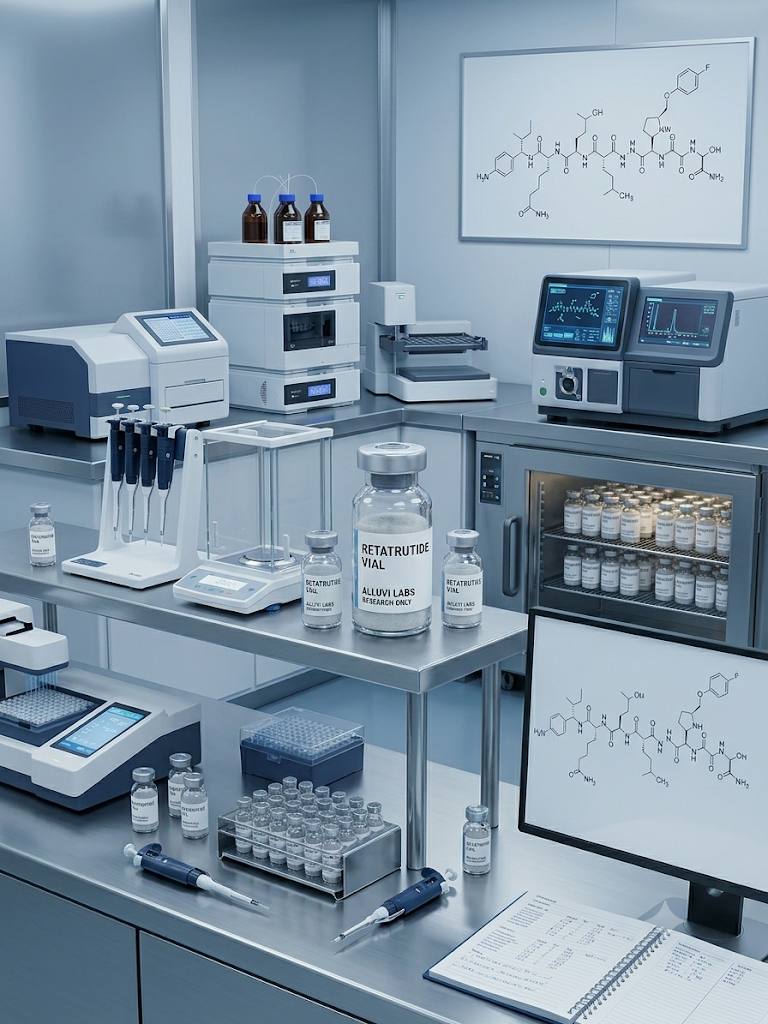
Explore Metabolic Peptides Figure 1: Comparative Incretin Receptor Signaling Protocols in Preclinical Models.
3. Preclinical Assay Preparation & Storage Guidelines
Incretin analogue peptides require careful laboratory handling to maintain structural integrity and prevent aggregation in aqueous buffer solutions:
- Maintain unconstituted lyophilized vials in sub-zero environments at -20°C or -80°C long-term.
- Reconstitute using bacteriostatic water or sterile phosphate-buffered saline (PBS) dependent on assay duration.
- Protect reconstituted peptide aliquots from direct ultraviolet light exposure and avoid shear-stress forces from vigorous vortexing.
⚠️ Preclinical Integrity Notice
All laboratory compounds referenced in this article are distributed strictly for in vitro laboratory research, analytical testing, and scientific validation. They are explicitly not intended or approved for human clinical use, veterinary administration, or therapeutic application.