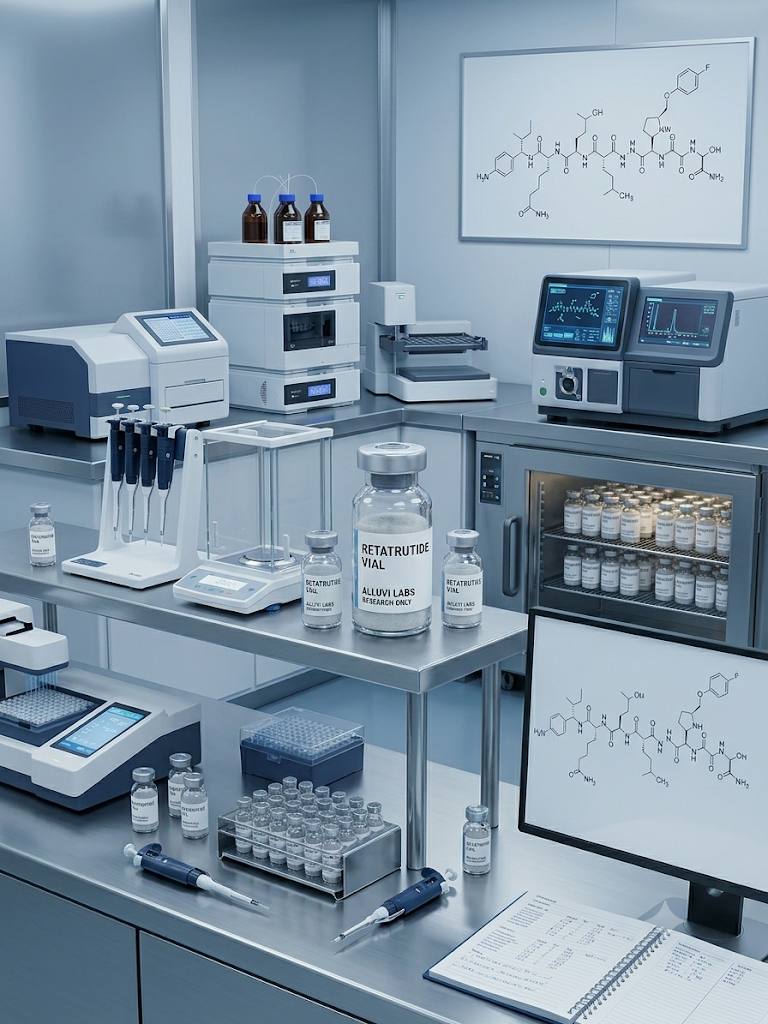
Tissue repair research peptides. In regenerative bio-chemistry, tissue repair research peptides represent a vital class of signaling molecules investigated for their ability to accelerate cellular migration, stimulate angiogenesis, and modulate extracellular matrix (ECM) synthesis. Preclinical models frequently center on synthetic and endogenous sequences—most notably BPC-157, TB-500 (Thymosin Beta-4 fragment), and GHK-Cu—to study structural recovery mechanisms in musculoskeletal and cutaneous tissues.
1. Angiogenesis and Vascular Endothelial Growth Factor (VEGF) Signaling
A fundamental requirement for tissue regeneration is the formation of new blood vessels to supply oxygen and nutrients to damaged cellular matrices:
- BPC-157 Pathway Dynamics: Research indicates BPC-157 promotes tendon, ligament, and mucosal healing primarily through the upregulation of VEGFR2 signaling and activation of the FAK-paxillin pathway, driving rapid endothelial cell migration.
- TB-500 Actin Regulation: TB-500 operates by sequestering G-actin, facilitating cell motility and tissue repair across cardiac, dermal, and corneal cell cultures.
- GHK-Cu Collagen Remodeling: The copper peptide complex GHK-Cu stimulates gene expression responsible for type I collagen synthesis, glycosaminoglycan accumulation, and dermal remodeling.
VEGFR2 Activation ➔ Endothelial Migration ➔ Accelerated Angiogenesis
Actin Sequestration ➔ Cell Motility ➔ Matrix Alignment & Tendon Repair
Actin Sequestration ➔ Cell Motility ➔ Matrix Alignment & Tendon Repair
2. In Vitro Cellular Models & Combination Research
Preclinical studies often evaluate the co-administration of cytoprotective sequences like BPC-157 and TB-500. While BPC-157 targets early-phase vascular sprouting and nitric oxide modulation, TB-500 influences long-term cell migration and structural organization, offering a dual-action framework for connective tissue research.
Explore High-Purity Tissue Repair Sequences
Source analytical-grade tissue research peptides synthesized to strict reference standards (>99% HPLC) for cell culture and matrix assays.
View Research Peptides Figure 1: Extracellular Matrix Remodeling and Vascularization Pathways in Preclinical Models.
3. Storage Protocols & Solution Preparation
To maintain molecular stability during laboratory evaluation, precise storage conditions must be observed:
- Store freeze-dried lyophilized powder at -20°C in a moisture-free environment.
- Reconstitute using sterile laboratory-grade solvents under laminar flow conditions.
- Avoid repeated freeze-thaw cycles after reconstitution to preserve sequence activity.
⚠️ Preclinical Integrity Notice
All laboratory compounds referenced in this article are distributed strictly for in vitro laboratory research, analytical testing, and scientific validation. They are explicitly not intended or approved for human clinical use, veterinary administration, or therapeutic application.