Alluvi bpc-157 & tb-500. In preclinical tissue regeneration and cellular recovery studies, evaluating single synthetic peptides often reveals clear mechanistic bottlenecks. To address multi-pathway repair dynamics, researchers frequently investigate the dual co-administration of BPC-157 (Body Protection Compound-157) and TB-500 (Thymosin Beta-4 fragment). When examining Alluvi BPC-157 & TB-500 blend research, investigators analyze how localized angiogenic signaling converges with systemic actin-mediated cell migration to accelerate structural matrix recovery.
1. Convergent Mechanisms: Infrastructure vs. Cellular Motility
BPC-157 and TB-500 operate through distinct, non-overlapping biochemical pathways that address different phases of the cellular repair cascade:
- BPC-157 Angiogenesis & VEGF Upregulation: BPC-157 acts primarily at the localized tissue site, promoting VEGFR2 expression and modulating nitric oxide (NO) pathways to stimulate rapid endothelial tube formation and capillary sprouting.
- TB-500 Actin Polymerization & Migration: As an active fragment of thymosin beta-4, TB-500 sequesters G-actin, enabling rapid cell motility, cytoskeletal reorganization, and systemic recruitment of fibroblasts to injured matrices.
- Synergistic Cross-Talk: While BPC-157 establishes the vascular infrastructure and growth factor signaling environment, TB-500 mobilizes the repair cells necessary to construct new tissue.
BPC-157 (VEGFR2 / NO Modulation) ➔ Vascular Infrastructure Setup
TB-500 (Actin Regulation) ➔ Cellular Migration & Scaffolding Assembly
Combined Action ➔ Multi-Pathway Tissue Matrix Regeneration
TB-500 (Actin Regulation) ➔ Cellular Migration & Scaffolding Assembly
Combined Action ➔ Multi-Pathway Tissue Matrix Regeneration
2. Primary Experimental Assay Targets
Research protocols incorporating BPC-157 and TB-500 dual formulations analyze several key tissue repair dynamics:
- Myotendinous & Ligamentous Repair: Measuring collagen deposition rates and focal adhesion kinase (FAK) activation in tendon fibroblast cultures.
- Inflammatory Cytokine Downregulation: Tracking shifts in TNF-α, IL-6, and NF-κB inflammatory signaling during acute tissue stress.
- Endothelial & Epithelial Migration: Observing scratch-assay healing speeds in cellular co-cultures.
Explore High-Purity BPC-157 & TB-500 Reagents
Access analytical-grade BPC-157 and TB-500 dual research reagents manufactured to strict reference standards (>99% HPLC) for laboratory testing.
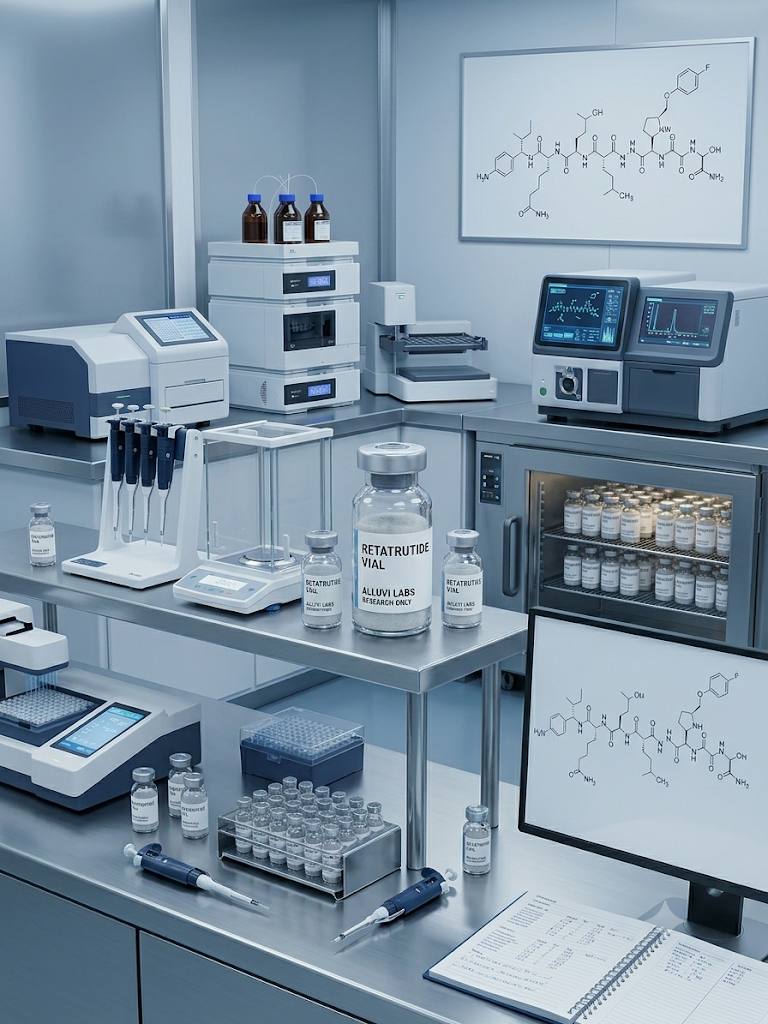
Shop Research Peptides Figure 1: Analytical-Grade BPC-157 & TB-500 Research Reagents.
3. Laboratory Storage & Reconstitution Guidelines
Maintaining cold-chain parameters ensures long-term sequence stability during research trials:
- Store freeze-dried lyophilized vials in sub-zero freezer environments at -20°C or lower upon receipt.
- Reconstitute using sterile bacteriostatic water under aseptic laminar flow hood conditions.
- Divide reconstituted liquid into working aliquots to prevent sequence degradation caused by multiple freeze-thaw cycles.
⚠️ Preclinical Integrity Notice
All laboratory assets documented within this registry are distributed exclusively for verified laboratory research, analytical control trials, and foundational in vitro testing models. This chemical compound is strictly not approved for human therapeutic, clinical, veterinary, or diagnostic administration.