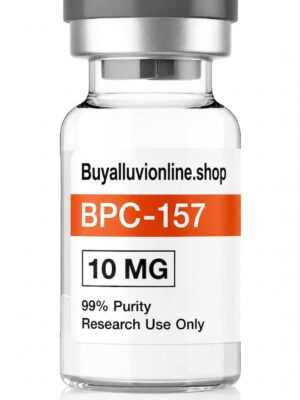
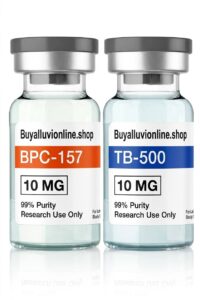
Research Bundle – BPC157 10mg / TB500 10mg Peptide Vial Bundle
£59.99
HPLC Tested – UKAS & ISO 9001 – >99% Purity
-20°C Cold-Chain Storage
Same-Day Dispatch (Before 4pm)
Cellular Repair Research Bundle (BPC-157 10mg / TB-500 10mg)
What is the BPC-157 & TB-500 Peptide Bundle?
The BPC-157 TB-500 bundle represents the most widely studied dual-peptide pairing in modern regenerative biochemistry. This highly concentrated research kit combines two heavy-hitting, premium-grade compounds inside an all-in-one stack, giving investigators the exact tools required to evaluate multi-tiered tissue healing, cellular migration, and structural protein synthesis concurrently.
Each bundle contains two high-capacity, vacuum-sealed lyophilized vials manufactured under strict laboratory guidelines:
- BPC-157 (10mg): A 15-amino-acid synthetic gastric pentadecapeptide renowned for its powerful organo-protective and localized fibroblastic healing traits.
- TB-500 (10mg): The 17–23 active amino acid chain fragment of the naturally occurring mammalian protein Thymosin Beta-4, heavily examined for its systemic cellular mobility.
The Science of Synergy: Dual-Pathway Cellular Acceleration
Purchasing a coordinated tissue repair peptide bundle allows researchers to investigate the complex cross-talk between distinct biological repair mechanisms. While each peptide performs excellently as a monotherapy, studying the BPC 157 and TB 500 stack unlocks a comprehensive, two-pronged approach to cellular recovery:
1. Angiogenesis and Micro-Vascularization
Efficient tissue remodeling requires an uninterrupted supply of oxygen and metabolic nutrients. BPC-157 initializes early angiogenesis by upregulating the expression of Vascular Endothelial Growth Factor (VEGF), spurring the creation of new capillary lines. Concurrently, TB-500 promotes endothelial cell differentiation, stabilizing these newly forming microvascular networks to maximize localized perfusion.
2. Cellular Migration vs. Structural Building
A major limitation in injured tissue environments is cellular immobilization. The TB-500 10mg vial directly addresses this by binding to G-actin and upregulating actin polymerization, providing cells with the dynamic motility needed to travel swiftly across injured tissue zones. Once at the injury site, BPC-157 10mg takes over by stimulating fibroblast proliferation and driving the rapid deposition of resilient Type I collagen.
3. Scar Minimization and Balanced Inflammation
Chronic, unregulated inflammation frequently results in the development of brittle, inelastic scar tissue. Preclinical data indicates that combining these two compounds yields a profound modulation of pro-inflammatory cytokines and chemokines. This balanced environment allows healing tissues to maintain their original elasticity and tensile strength while preventing dense fibrotic adhesions.
Primary Research Applications of the Dual Bundle
This specific BPC-157 TB-500 bundle is commonly deployed by laboratory investigators studying complex, multi-variable trauma profiles:
- Advanced Musculoskeletal Restoration: Examining simultaneous injuries involving dense connective structures like tendons, ligaments, cartilage, and micro-tears in skeletal muscle.
- Dermal Wound and Burn Models: Assessing cellular speed variations during superficial skin contractions, re-epithelialization, and rapid collagen matrix mapping.
- Joint Flexibility & Range of Motion Studies: Observing how preventing fibrotic adhesions helps preserve original range-of-motion metrics in post-traumatic recovery models.
Technical and Chemical Specifications
To ensure absolute baseline control and flawless data replication, both lyophilized powders in this bundle conform to strict analytical verification:
| Specification | BPC-157 (10mg) | TB-500 (10mg) |
|---|---|---|
| Chemical Structure | Pentadecapeptide (15 Amino Acids) | Acetylated Fragment (7 Amino Acids) |
| Sequence | H-Gly-Glu-Pro-Pro-Pro-Gln-Pro-Ala-Glu-Val-Leu-Gly-All-Leu-Val-OH | Ac-LKKTETQ-OH.Acetate |
| CAS Number | 137525-51-0 | 885340-08-9 |
| Molecular Formula | C62H98N16O22 | C38H68N10O14 |
| Molecular Mass | 1419.53 g/mol | 889.01 g/mol |
| Purity Profile | ≥ 98.5% (HPLC / MS verified) | ≥ 98.0% (HPLC / MS verified) |
| Physical Form | Sterile Lyophilized White Cake | Sterile Lyophilized White Powder |
- Storage Profiles: Store sealed, dry vials at -20°C for optimal long-term shelf life. Once reconstituted, solutions must be refrigerated at 2–8°C.
Why Buy Our BPC-157 / TB-500 Bundle?
When deciding to buy BPC-157 TB-500 online, selecting verified purity is paramount to preventing skewed data points. Our 10mg dual-vial packages are synthesized in identical clean-room conditions to eliminate cross-contamination and composition variations. Vacuum-sealed under an inert gas layer, this premium pairing ensures maximum structural stability and consistent biochemical integrity from the moment it enters your facility.
Laboratory Research Disclaimer
This bundle and the individual peptide vials contained within are synthesized exclusively for in vitro and in vivo laboratory research and development applications. They are strictly not intended, cleared, or approved for human consumption, clinical injection, diagnostic protocols, or veterinary treatments. All buyers must be qualified research professionals.
Frequently Asked Questions (FAQ)
- What liquid should be used to reconstitute these vials?
For standard laboratory observation, both lyophilized powders are typically reconstituted using sterile Bacteriostatic Water (0.9\% \text{ benzyl alcohol}) or sterile Physiological Saline (0.9\% \text{ NaCl}). - Can I combine BPC-157 and TB-500 into a single liquid solution?
Even though these compounds are regularly examined in identical cell cultures, mixing different molecular weights inside a single liquid container can speed up chemical breakdown or cause premature peptide precipitation. It is best practice to reconstitute each sterile vial entirely independently. - Why choose the 10mg variants over smaller sizes?
The 10mg variations provide researchers with a significantly larger testing volume, allowing for high-throughput baseline evaluations and extensive multi-stage assays without the minor batch-to-batch variations associated with purchasing multiple smaller vials.
Related Research Articles
BPC-157 vs TB-500: Key Differences in Research Models
Peptide Storage and Stability in Laboratory Settings
How Peptides Are Reconstituted for Research Use
Overview of Tissue Repair Peptides in Scientific Studies