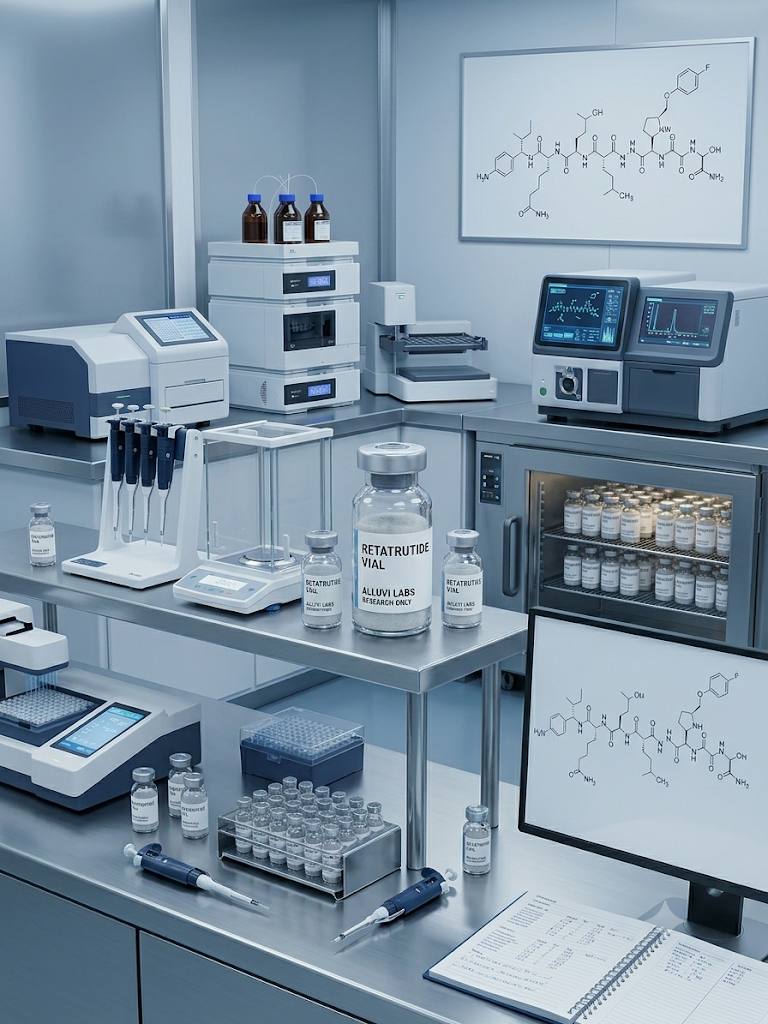
Peptide Storage and Stability in Laboratory Settings
Introduction
Proper peptide storage is one of the most important factors in maintaining compound stability during laboratory research.
Peptides are sensitive molecular structures that may degrade when exposed to:
- Heat
- Moisture
- Light
- Oxidation
- Repeated temperature fluctuations
Researchers use specific storage methods to help preserve peptide integrity and maintain consistency in experimental settings.

Why Peptide Stability Matters
Peptides are composed of amino acid chains that can become unstable under poor environmental conditions.
Degradation may affect:
- Molecular structure
- Experimental consistency
- Biological activity in research models
Storage protocols are therefore critical in peptide-based laboratory work.
Common Peptide Storage Conditions
Lyophilized (Dry) Peptides
Lyophilized peptides are freeze-dried powders commonly stored:
- In cool environments
- Away from moisture
- In sealed containers
Research environments often use:
- Refrigeration
- Freezing conditions
- Low-humidity storage
Reconstituted Peptides
Once mixed into solution, peptides generally become less stable compared to their dry state.
Researchers monitor:
- Solution temperature
- Sterility
- Exposure duration
- Oxidation risk
Storage duration may vary depending on:
- Peptide composition
- Solvent used
- Environmental exposure
Factors That Affect Peptide Stability
Temperature
Heat exposure may accelerate:
- Molecular breakdown
- Structural instability
- Oxidation reactions
Moisture
Moisture may contribute to:
- Hydrolysis
- Peptide degradation
- Reduced experimental consistency
Light Exposure
Certain peptides may be sensitive to:
UV exposure
Direct light conditions
Researchers often use dark or opaque storage containers.
Laboratory Handling Practices
Common research handling methods include:
- Minimizing repeated freeze-thaw cycles
- Using sterile laboratory equipment
- Limiting unnecessary environmental exposure
- Separating peptides into smaller storage portions
Scientific Considerations
Peptide stability varies depending on:
- Amino acid sequence
- Molecular complexity
- Solution composition
- Storage environment
Because of this, handling procedures may differ between research compounds.
Summary
Proper storage conditions are essential for maintaining peptide stability in laboratory settings.
Temperature control, moisture reduction, sterile handling, and minimizing environmental exposure all play important roles in preserving peptide integrity during research applications.