BPC-157 and TB-500 Synergy,When mapping the cellular mechanisms of musculoskeletal tissue repair, researchers frequently encounter biochemical limitations when analyzing single-target agents. Soft-tissue healing is an incredibly complex, multi-phased physiological loop that requires simultaneous structural migration and vascular remodeling. To observe this sequence at an accelerated scale, preclinical laboratory frameworks increasingly implement a combination model: BPC-157 and TB-500. By evaluating these two isolated research compounds concurrently, investigators can track profound cross-talk between separate cellular repair pathways.
1. BPC-157: Upregulating Gastric Pentadecapeptide Signaling
BPC-157 is a partial sequence of human gastric juice protein, consisting of 15 highly stable amino acids. In isolated tissue cultures, its primary mechanism revolves around the stabilization and activation of the Vascular Endothelial Growth Factor (VEGF) pathway.
By driving early-stage angiogenesis (the formation of new blood vessels from pre-existing ones), BPC-157 establishes the core microvascular network needed to deliver essential nutrients to damaged tissue matrices. Additionally, in vitro assays demonstrate that BPC-157 neutralizes the inhibitory effects of specific inflammatory molecules, preserving the structural baseline of localized tendon fibroblasts and accelerating early granulation tissue layout.
2. TB-500: Actin Sequestering and Cellular Mobility
Operating on an entirely independent molecular axis, TB-500 (a synthetic derivative of the naturally occurring peptide Thymosin Beta-4) targets cellular movement. Its primary biochemical behavior is the regulation of Actin—a structural protein critical for cell motility, morphology, and cytoskeletal infrastructure.
By binding directly to G-actin (globular actin), TB-500 prevents its premature polymerization into F-actin (filamentous actin). This builds a vital intracellular reservoir of free actin subunits, allowing the cell to rapidly reconstruct its cytoskeleton. In an experimental dish, this directly translates into vastly superior cell migration rates, allowing newly formed fibroblasts and endothelial cells to traverse the extracellular matrix and migrate into the center of a simulated cellular injury zone.
Sourcing High-Purity Healing Matrices for Preclinical Assays
Investigating mechanical cellular synergy demands reagents of absolute purity. Sequence deletion variants or trace moisture loops can drastically skew cellular migration data.
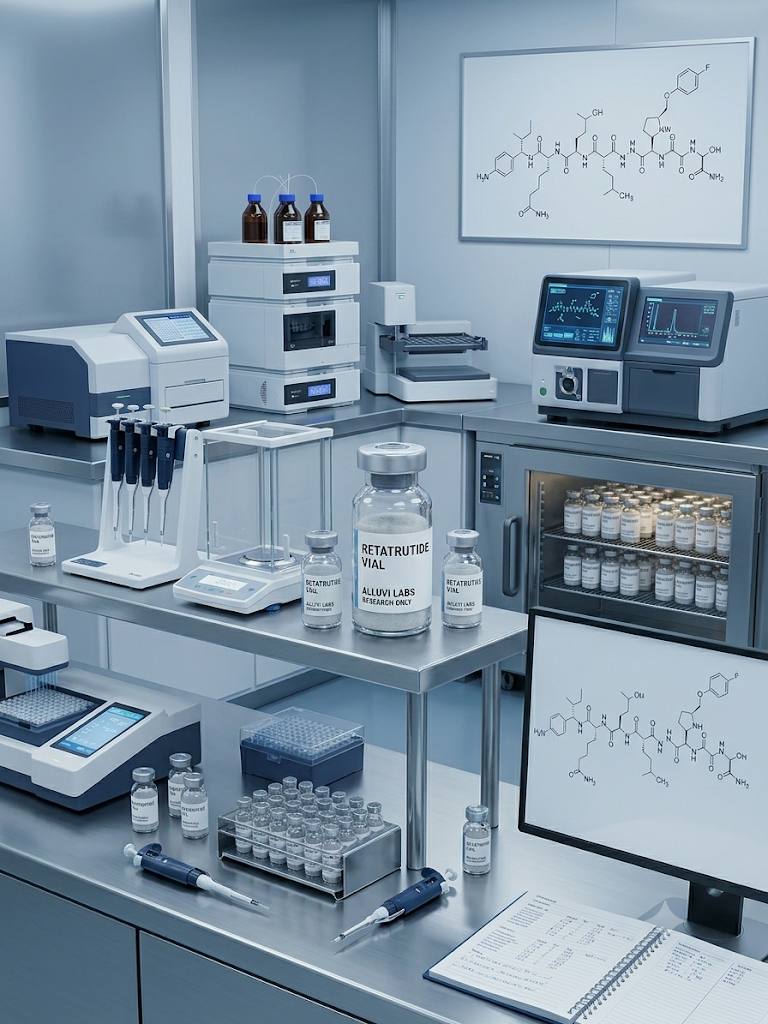
Buy HPLC-Verified BPC-157 & TB-500 Reagents Figure 1: Intracellular tracking of synthetic co-agonist signaling vectors.
3. The Dual-Action Synergy Profile
When these two agents are combined within a single preclinical testing architecture, their biological behaviors do not compete; instead, they complement one another sequentially:
- The Conduit and Caravan Dynamics: BPC-157 effectively builds the vascular “conduits” via localized angiogenesis upregulation, while TB-500 mobilizes the cellular “caravans” (fibroblasts and keratinocytes) required to populate and rebuild the structural matrix.
- Extracellular Matrix (ECM) Reorganization: BPC-157 promotes the expression of growth factor receptors, preparing the cell surfaces to actively receive and utilize the actin-remodeling commands triggered by incoming TB-500 strands.
- Collagen Cross-Linking Assays: Joint exposure models reveal a significant reduction in erratic scar-tissue tissue clustering, shifting deposition trends toward orderly, parallel collagen strand alignment.
4. Laboratory Protocols and Compound Reconstitution
Both BPC-157 and TB-500 are highly sensitive to thermal degradation and sudden mechanical forces. Lyophilized vials should be maintained at a steady state of -20°C for long-term protection. Upon reconstitution with Sterile Bacteriostatic Water, the liquid should be introduced slowly down the interior glass wall rather than dropped directly onto the lyophilized cake. Avoid vortexing or shaking; instead, use smooth, circular hand motions to bring the solution to full clarity.
⚠️ Preclinical Integrity Notice
All laboratory assets documented within this registry are distributed exclusively for verified laboratory research, analytical control trials, and foundational in vitro testing models. This chemical compound is strictly not approved for human therapeutic, clinical, veterinary, or diagnostic administration.