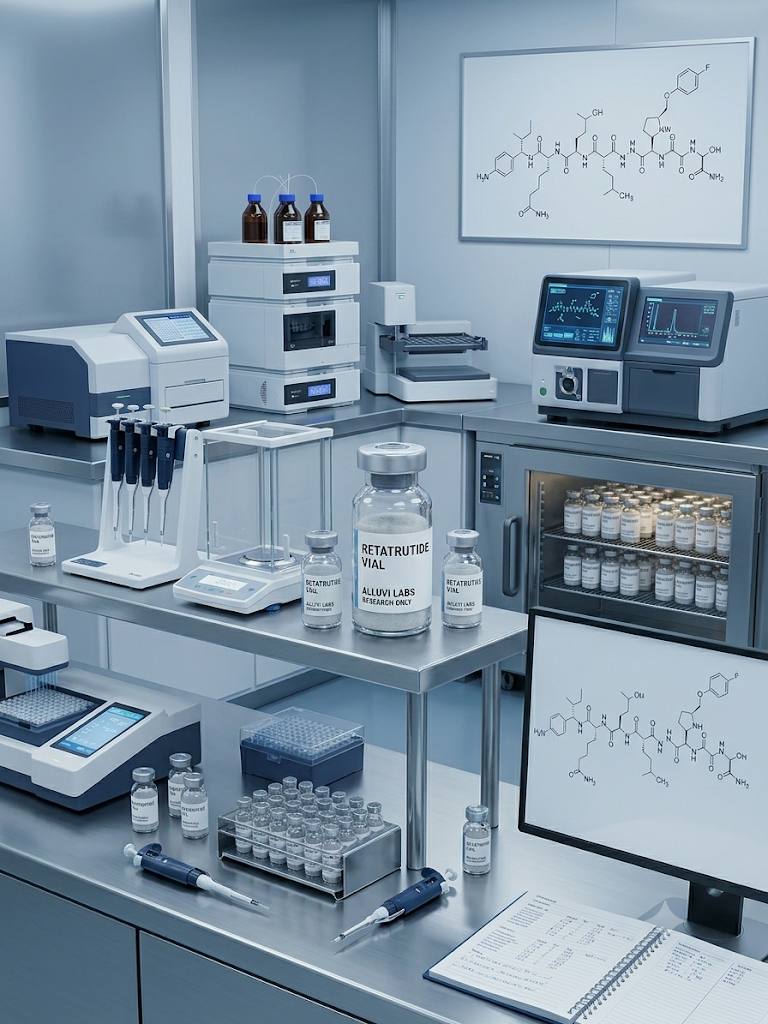
PRECLINICAL INTEGRITY NOTICE: All compounds and materials referenced on this site, including HMG (Human Menopausal Gonadotropin), are strictly intended for laboratory research and analytical evaluation purposes only. Products are not intended for human consumption, clinical diagnosis, therapeutic application, or veterinary use. All research must be conducted by qualified laboratory professionals in accredited facilities.
Human Menopausal Gonadotropin (HMG) remains a widely evaluated subject in endocrine and reproductive research. Understanding the analytical profile, stability requirements, and structural characteristics of the HMG peptide is essential for maintaining experimental consistency across laboratory trials.
What is the HMG Peptide?
HMG is a naturally derived glycoprotein complex containing naturally balanced proportions of Follicle-Stimulating Hormone (FSH) and Luteinizing Hormone (LH) activity. In preclinical models, researchers utilize HMG to examine gonadotropin receptor binding pathways, steroidogenesis mechanisms, and cellular signaling networks within endocrine tissue.
 Figure 1: HMG Peptide Research Guide: Mechanism, Purity & Handling.
Key Research Applications for HMG
In analytical laboratory settings, investigators explore several key biological mechanisms using high-purity HMG reagents:
- Receptor Affinity Mapping: Evaluating the dual activation of FSH and LH cell receptors simultaneously.
- Steroidogenic Signalling: Observing downstream hormone biosynthesis patterns in cultured cellular lines.
- Endocrine System Regulation: Studying feedback loop dynamics within hypophyseal pathways under controlled environment settings.
Storage, Reconstitution, and Reagent Purity
To preserve biological integrity during testing, researchers follow strict protocol standards when handling lyophilized peptides like HMG:
- Lyophilized Storage: Unreconstituted vials should be stored at controlled temperatures (-20°C or below) away from light exposure.
- Reconstitution Protocol: Dilution should be performed using sterile bacteriostatic water, ensuring minimal agitation or shaking to avoid shearing delicate protein structures.
- Analytical Testing: Always verify batch quality via HPLC (High-Performance Liquid Chromatography) analysis to confirm minimum purity thresholds (99%+ purity).
For research teams seeking to buy HMG peptide reagents for ongoing laboratory trials, verifying analytical documentation and storage stability ensures valid, reproducible experimental data.