Cellular Regeneration Research Bundle (BPC-157 / TB-500 / GHK-Cu)
What is the BPC-157 / TB-500 / GHK-Cu Bundle?
The BPC-157 TB-500 GHK-Cu bundle is an all-in-one, highly concentrated peptide stack engineered specifically for comprehensive laboratory evaluation. By combining three of the most heavily studied compounds in modern biochemistry, this bundle allows researchers to explore multi-pathway cellular repair, deep tissue remodeling, and advanced collagen cross-linking simultaneously.
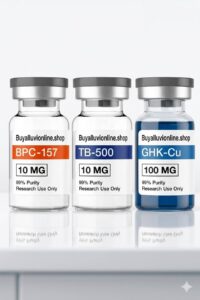
Each kit contains three high-purity, vacuum-sealed lyophilized vials designed to work in synergy within preclinical research models:
BPC-157 (10mg): The premier cytoprotective gastric pentadecapeptide targeted toward fibroblast and soft-tissue repair.
TB-500 (10mg): The highly mobile 17–23 amino acid active fragment of Thymosin Beta-4, known for its rapid actin-binding cellular migration traits.
GHK-Cu (100mg): An ultra-potent dose of the copper-binding tripeptide matrikine, renowned for its broad-spectrum gene modulation, skin remodeling, and extracellular matrix stabilization.
The Science of Synergy: Dynamic Mechanisms of Action
Purchasing a peptide research bundle allows investigators to study cross-talk between separate biochemical cascades. While a single peptide addresses a specific physiological pathway, this triple-combination stack targets cellular restoration from three unique angles:
While BPC-157 signals fibroblasts to synthesize new Type I collagen at an injury site, GHK-Cu 100mg ensures those structural proteins are organized correctly. GHK-Cu provides divalent copper ions ($ \text{Cu}^{2+} $) to copper-dependent enzymes like lysyl oxidase, which cross-links collagen and elastin. This transforms chaotic scar tissue into a densely aligned, mechanically sound structural matrix.
2. Accelerated Migration and Tissue Perfusion
A major hurdle in cellular healing models is cellular immobilization. The TB-500 10mg vial counters this by upregulating actin polymerization, allowing newly formed repair cells to travel directly to damaged zones. Simultaneously, BPC-157 initiates angiogenesis via VEGF upregulation, developing new micro-capillary branches to adequately perfuse the newly migrating cells with nutrients.
3. Broad-Spectrum Cytoprotection and Gene Modulation
GHK-Cu has been shown in genomic data to modulate thousands of genes toward a healthy, systemic baseline state. When combined with the heavy nitric oxide (NO) pathway stabilization provided by BPC-157 10mg, the stack acts as a potent protective shield, downregulating chronic pro-inflammatory cytokines while elevating natural antioxidant defenses (such as superoxide dismutase and glutathione).
Primary Areas of Focus in Tri-Peptide Stacking Research
This comprehensive cellular repair peptide stack opens vast opportunities for multi-tiered scientific examination:
Complex Musculoskeletal Restoration: Evaluating complex injuries where bone, muscle, tendon, and ligament damage happen concurrently.
Dermatological Remodeling & Anti-Aging: Studying deep tissue wound contraction, keratinocyte proliferation, skin thickness density, and hair follicle micro-circulation models.
Advanced Angiogenesis Studies: Investigating micro-vascularization and macro-vascular density responses in oxygen-deprived or ischemic tissues.
Scar Tissue and Fibrosis Invalidation: Observing how the combined downregulation of transforming growth factor-beta (TGF-\beta) prevents dense adhesions and joint stiffness.
Technical and Chemical Specifications
Every batch inside our BPC-157 TB-500 GHK-Cu bundle is strictly validated using HPLC and Mass Spectrometry to guarantee chemical uniformity across assays:
Technical and Chemical Specifications
Every batch inside our BPC-157 TB-500 GHK-Cu bundle is strictly validated using HPLC and Mass Spectrometry to guarantee chemical uniformity across assays:
Compound
Molecular Formula
Molecular Mass
CAS Number
Purity Profile
BPC-157 (10mg)
C62H98N16O22
1419.53 g/mol
137525-51-0
≥ 98.5%
TB-500 (10mg)
C38H68N10O14
889.01 g/mol
885340-08-9
≥ 98.0%
GHK-Cu (100mg)
C14H21CuN6O4
401.91 g/mol
89030-95-5
≥ 99.0%
Physical Appearance: High-purity white lyophilized cake (BPC-157 / TB-500); distinct deep blue lyophilized cake (GHK-Cu, due to pure copper chelation).
Storage Requirements: Keep all un-reconstituted vials desiccated at -20°C for long-term stabilization. Keep reconstituted solution refrigerated at 2–8°C.
Why Choose Our Peptide Research Bundle?
When you buy peptide bundles online, small variations in laboratory testing can compromise whole datasets. Our bundled kits are manufactured under identical clean-room parameters, ensuring no structural anomalies or cross-contamination. With the inclusion of a high-capacity 100mg GHK-Cu vial alongside massive 10mg BPC-157 and TB-500 variants, this bundle offers unmatched analytical value for high-throughput, multi-variable laboratory studies.
Laboratory Research Disclaimer
This bundle and the compounds therein are synthesized strictly for in vitro and in vivo laboratory research and development purposes. They are absolutely not intended, cleared, or approved for human consumption, clinical diagnostics, cosmetic placement, or veterinary therapeutic applications. All purchasing entities must be qualified researchers.
Frequently Asked Questions (FAQ)
Why is the GHK-Cu powder bright blue while the others are white?
The vibrant blue color of the GHK-Cu lyophilized cake is entirely natural and indicates a successful, pure coordination complex between the tripeptide molecule and divalent copper ($ \text{Cu}^{2+} $). Pure GHK powder without copper is off-white, but its biological activity is substantially lower.
Can all three peptides be mixed into the same vial during reconstitution?
While these peptides are frequently evaluated simultaneously in cellular models, blending different molecular weights directly into a single fluid vial before testing can speed up chemical degradation or lead to unexpected peptide precipitation. It is highly recommended to reconstruct each sterile vial independently with Bacteriostatic Water or sterile Physiological Saline.